Baked Oatmeal Revisited
“I, even I, am the LORD, and apart from me there is no savior. I have revealed and saved and proclaimed— I, and not some foreign god among you. You are my witnesses,” declares the LORD, “that I am God.” Isaiah 43:11-12 NIV
Leviticus 16:29-30
“This is to be a lasting ordinance for you: On the tenth day of the seventh month you must deny yourselves[a] and not do any work—whether native-born or a foreigner residing among you— 30 because on this day atonement will be made for you, to cleanse you. Then, before the LORD, you will be clean from all your sins.
[Yom Kippur, the Day of Atonement
](https://www.biblegateway.com/blog/2011/10/yom-kippur-the-day-of-atonement/)(taken from the Bible Gateway blog)
Yom Kippur, the most significant holy day in Judaism, began last night at sundown and runs through sundown today. Jews observe this event with prayer and repentance, much as the Old Testament Israelites did. It was established during the time of Moses as the Day of Atonement, and is described in Leviticus 16: “This is to be a lasting ordinance for you: Atonement is to be made once a year for all the sins of the Israelites.”
If you’re not familiar with the Biblical Day of Atonement, take a few minutes to read about it. The account is full of a lot of “Old Testament language” about priests, sacrifices, offerings, and (literal) scapegoats—things that might feel foreign to modern Christians. But in describing the process by which God granted the people of Israel forgiveness for their sins (through an annual ceremony of sacrifice), it very directly foreshadows the manner in which Jesus Christ would one day sacrifice himself for our sins. Christians today don’t observe the system of Jewish holy days and feasts established in ancient Israel. But the Day of Atonement is an appropriate time to reflect on the weight of sin and guilt in our lives—and the merciful God who washes it away.
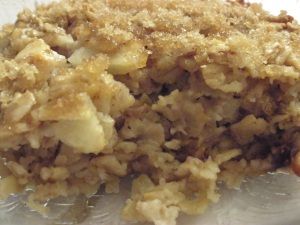
I used Winesap apples, chopped walnuts and I chopped up some tender fresh Medjool dates. Medjool dates are deep amber-brown and have a slightly crinkly skin that shimmers from natural sugar crystals. Bite into one, and your teeth sink into satisfyingly sticky flesh that tastes of rich caramel, hints of wild honey and a touch of cinnamon. Melt-in-your-mouth Medjools are so luscious they taste as if they have been warmed in an oven. If you haven’t ever eaten Me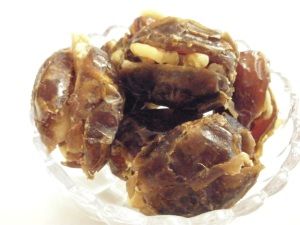
There is one caveat regarding Medjool dates: They are addictive. Eating too many of these sugary jewels can induce a hyperglycemic laziness (this is a benign condition which a brief nap will remedy). So I offer you the following three suggestions:
1. Pace yourself!
2. Leave the pits in full view so you can keep count of how many you’ve eaten.
I wish you a sweet, sunshine filled weekend blessed with time spent with family and friends.
**Apple, Dates and Walnuts Bake Oatmeal
**
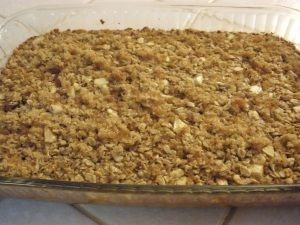
This looks like a long list of ingredients but actually it isn’t. This goes together in a matter of minutes and is very easy.
- 3 eggs
- ½ cup oil
- ½ cup sugar (white or brown)
- 3 cups oats (instant or old fashioned)
- 2 teaspoon baking powder
- 1 teaspoon salt
- 1 ¾ cups milk
- 1 teaspoon cinnamon
- 1 teaspoon vanilla

- 1 cup chopped walnuts
- 1 cup chopped Jumbo Medjool Dates
- 1 cup chopped apple (2 small apples)
Topping:
- 1/4 cup brown sugar
Preheat oven to 350 degrees. Beat together eggs, oil, and sugar. Add everything else. Beat together well. Pour into a greased 9” by 13” pan or baking dish. Bake for 30 minutes then spread ¼ cup brown sugar on top. Bake for 15 minutes more.
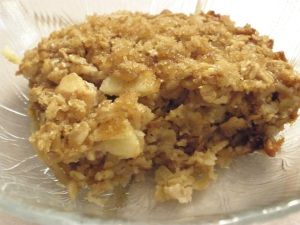
We eat this in a bowl with a little bit of warmed milk. Yummy!
A Date To Remember by Susan Russo
Dates are considered the oldest cultivated fruit in the world: Fossils show date palm trees thrived 50 million years ago. The fruit of the date palm was eaten as far back as 5,000-6,000 B.C.E., and they’ve been cultivated for about 6,000 years in the Middle East.
Ancient cultures called the date palm “the tree of life,” and used all parts of the tree, from the trunk to the leaves. Dates are still a staple source of nutrition for nomadic peoples because of their high carbohydrate content, high potassium levels and easy portability.
Hundreds of varieties of dates are grown throughout the world, about 12 of which can be found in the United States. They are classified as soft, semidry or dry. Soft dates such as the Medjool, Khadrawy, Halawy and Barhi have a sweet, creamy flesh because of their high moisture content. Semidry dates such as Deglet Noor and Zahidi have less moisture, sweetness and chewiness. Dry dates such as the Thoory, which is called the “bread” date, have rather hard, dry skin and very little moisture
Most U.S. dates — 95 percent — are grown in California’s Coachella Valley, a two-hour drive northeast of San Diego. Dates grow well there and in parts of southwestern Arizona because they like hot heads and wet feet. That is, they grow best in areas with high heat, low humidity and an abundant supply of groundwater.
Dates have been in California since the 18th century, when Spanish missionaries planted date palms around their missions. It wasn’t until 1927, however, that Medjools arrived. That year, disease was destroying Morocco’s Medjool crop. Walter Swingle, an American horticulturalist, brought 11 Medjool offshoots back to California from Morocco. Nine of the eleven survived and have become the source of the millions of Medjool dates grown today.
Among the Medjool’s many nicknames, “king of dates” is most fitting. Once reserved for Moroccan royalty and their guests, they were a precious confection and remain so today. Like many delicacies, Medjools are pricey because their cultivation is a complex and labor-intensive process.
Although date palms are naturally pollinated by wind, growers must hand-pollinate each tree to ensure adequate yield. A worker climbs the same 40- to 50-foot-high tree many times during the Medjool season. First, he trims the tree’s dangerously sharp 4- to 5-inch-long thorns. Then he removes most of the dates to increase the air circulation and sunlight they need to reach optimum size.
When the remaining dates reach their full size, he will protect them from birds, insects and occasional rain by covering them with burlap bags or nylon netting. Since dates do not ripen simultaneously, he must climb the tree several more times to harvest them.
Soft dates such as the Medjool are so delicate that most are picked individually by hand rather than in large clusters.
This season’s crop is currently available at supermarkets and online. They range from $6 to $10 per pound, depending on their size and quality, and come in grades: choice, soft, fancy, large and jumbo. In this case, bigger is better. Splurge and go for the jumbo.
To store Medjools, leave them covered on the counter for up to a week or place them in an air-tight container in the refrigerator for up to six months.
Free Cookbook!
Sign up today and receive my all-time favorite recipes cookbook. It's packed with easy, comforting dishes your family will love. This PDF is my free gift to you. It’s helped thousands bring more joy to the table! 5,500+ Downloads!